NFL Odds Comparison UK: Analysing Sportsbook Lines
 Available in US
Last October, I placed a spread bet on an NFL Sunday afternoon game at one sportsbook and then, out of curiosity, checked the same market at three other operators. The spread was identical — -6.5 at all four — but the odds ranged from 4/5 to 10/11. That difference, on a GBP 100 stake, was the gap between GBP 80 profit and GBP 91 profit. Eleven pounds for thirty seconds of comparison. I have not placed an NFL bet without checking at least two prices since.
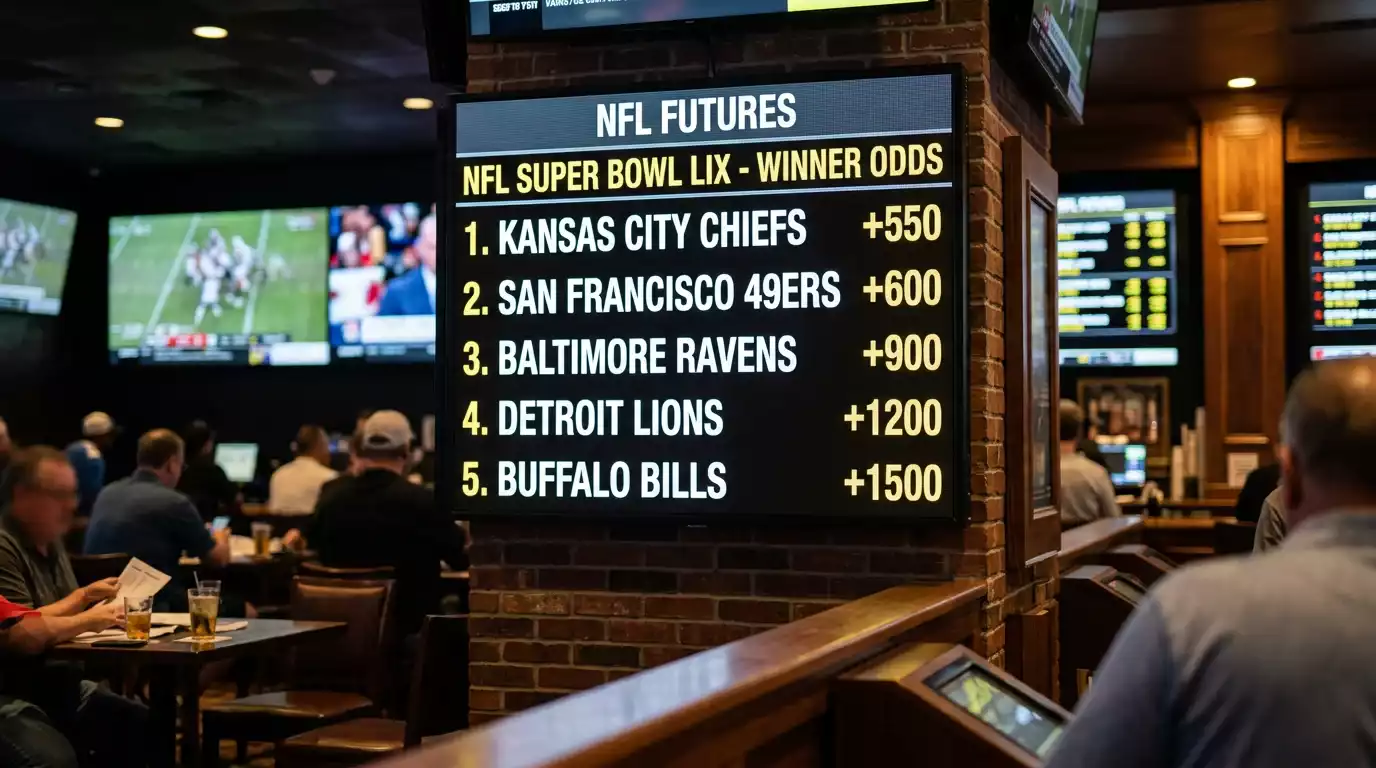
William Hill commands 37.83% of click-through PPC in the UK sports betting segment, with bet365 at 16.2%. Those two operators alone account for over half the paid search traffic, which tells you how concentrated attention is — and how many bettors never look beyond their default sportsbook. The NFL betting market in the UK supports dozens of licensed operators, each with their own trading teams, margin structures, and promotional pricing. The odds you see at one are not necessarily the odds you would see at another, and the gap between the best and worst available price on any given NFL market is wider than most punters assume.
NFL Odds Comparison: Analysing Margin Differences at UK Bookmakers
The starting point for every NFL line at a UK sportsbook is the same: the wholesale odds generated by the US market, where the vast majority of NFL handle originates. UK operators license data feeds from US-based odds services or employ their own traders who benchmark against the American consensus. The spread, the total, and the moneyline start from the same place across the industry.
Divergence happens through three mechanisms. First, margin: each sportsbook applies its own overround to the wholesale line. An operator with a 4% overround on NFL spreads offers better odds than one with a 6% overround, even though the underlying spread number is identical. The margin is how the sportsbook makes money, and some operators accept thinner margins on NFL markets to attract handle.
Second, liability management: if a sportsbook receives heavy one-sided action on a particular outcome, it may shade the odds on that side to discourage further money and attract money on the opposite side. The degree of shading depends on the operator’s risk appetite and the size of the imbalance. An operator that has taken GBP 50,000 on one side of a Sunday Night Football spread may offer noticeably worse odds on that side than an operator with balanced exposure.
Third, promotional pricing: odds boosts, enhanced accumulators, and market-specific promotions create temporary price distortions. An operator running an NFL odds boost on a specific game will offer better-than-market prices on the boosted selection while maintaining standard pricing elsewhere. These promotions are marketing expenditure, not permanent pricing shifts, and they create short-lived windows where one sportsbook genuinely offers better value than the rest.
How to Compare NFL Odds Efficiently
With roughly 12.7 million active online betting accounts in the UK, the majority of bettors hold accounts at multiple operators. If you already have two or three sportsbook accounts, comparing NFL odds before each bet is a habit that takes less than a minute and compounds into meaningful value over a full season.
Odds comparison websites aggregate prices from major UK sportsbooks and display them side by side. These tools are useful for a quick scan but carry two caveats. First, the odds displayed may lag behind real-time prices by a few minutes, particularly close to kick-off when lines are moving. Second, comparison sites may not include every operator, so smaller sportsbooks with competitive NFL pricing might be absent from the aggregation.
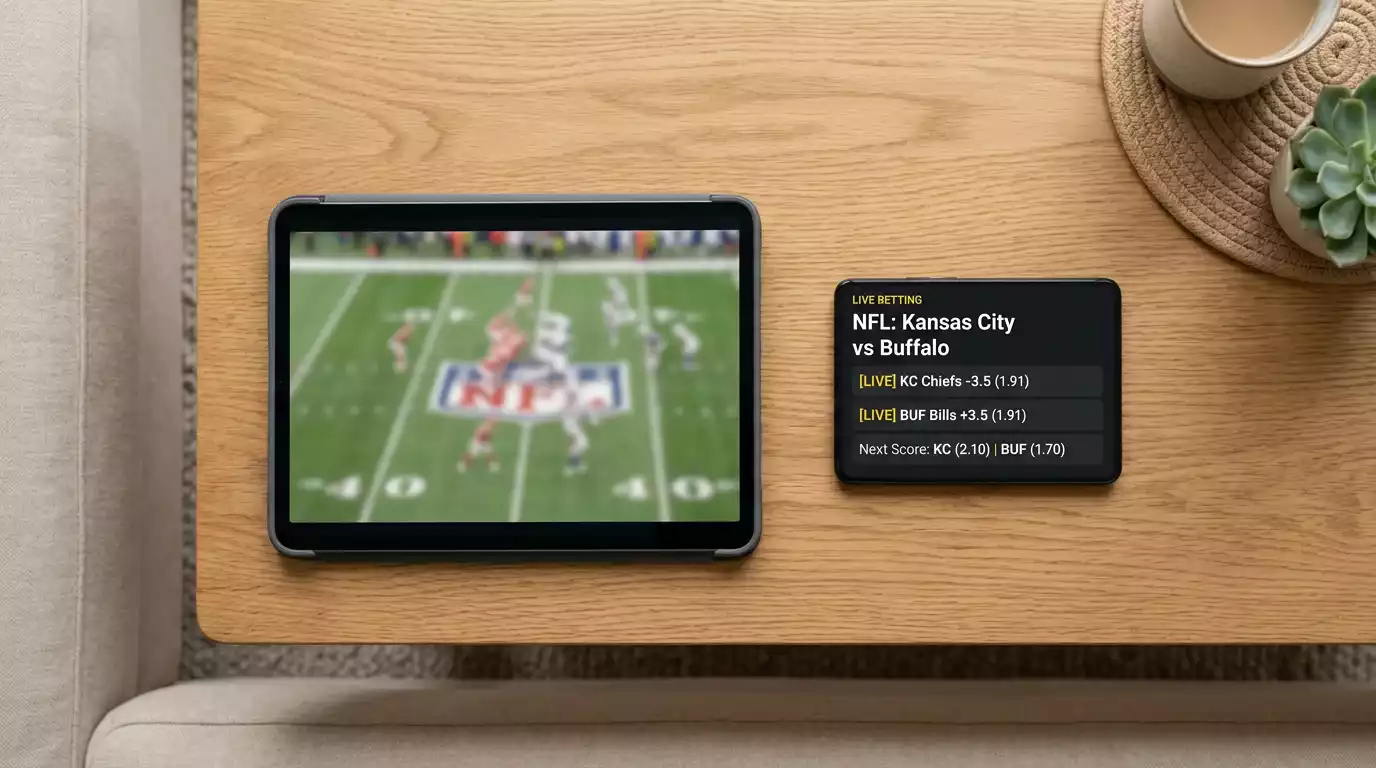
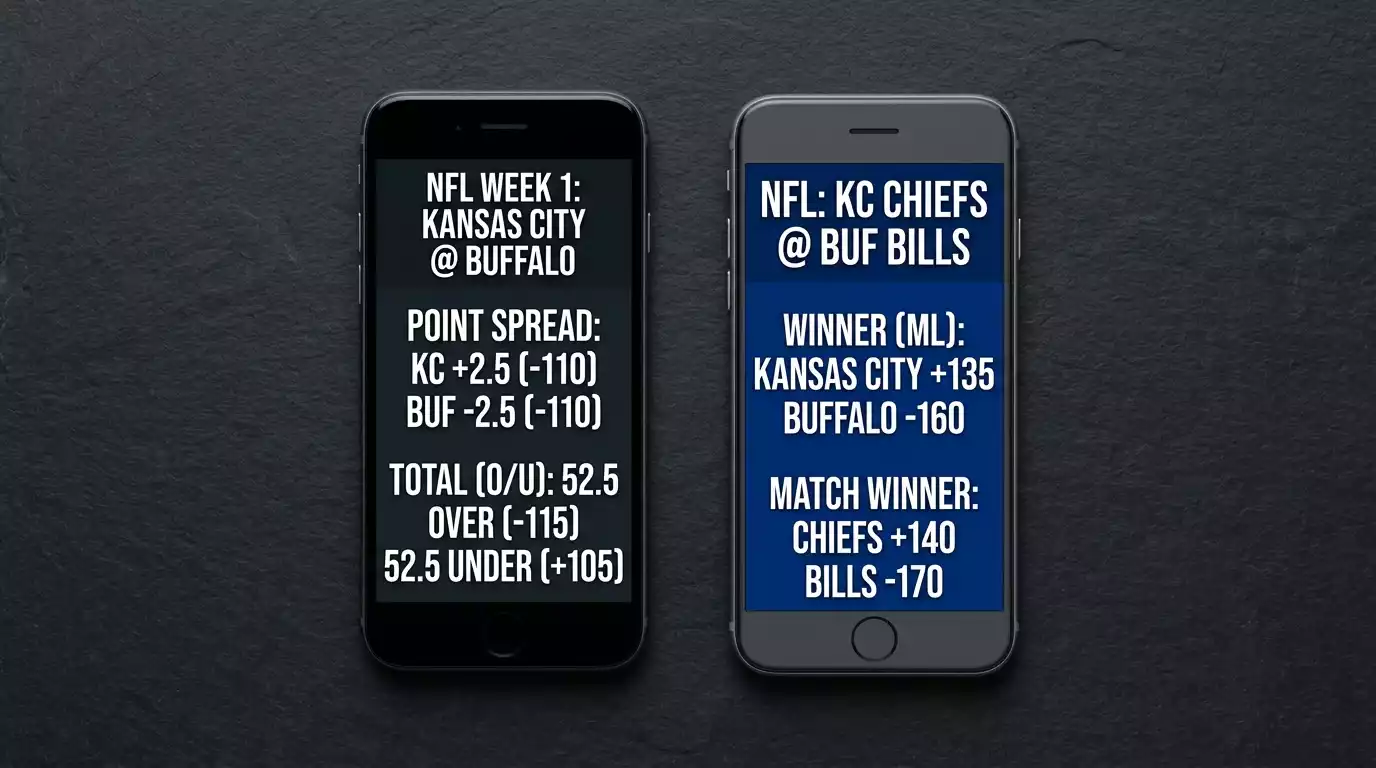
My process is simpler: I open two or three sportsbook apps on my phone, navigate to the same NFL game on each, and visually scan the prices on the market I want to bet. The entire process takes 30 to 60 seconds. I am not looking for dramatic differences — those are rare on main markets. I am looking for a half-point to a full point of odds value, which over a season of 50 to 80 bets translates into a measurable improvement in overall return.
For prop bets and bet builders, the comparison process is more complex because the same underlying market may be structured differently between operators. A quarterback passing yards over/under might be set at 249.5 at one sportsbook and 254.5 at another, making a direct odds comparison meaningless without also comparing the line. In these cases, I focus on the implied probability rather than the raw odds: convert each price to its implied probability, compare, and bet where the probability discount is largest.
Understanding Bookmaker Margin on NFL Markets
The bookmaker’s margin — also called the overround or vig — is the gap between the true probability of an event and the odds the sportsbook offers. On a fair coin toss, the true probability of each side is 50%. A bookmaker offering 10/11 on each side implies 52.4% probability per side — a total of 104.8%. That 4.8% is the overround.
NFL main markets (spread, moneyline, total) at competitive UK sportsbooks carry overrounds between 4% and 6%. Player props typically carry 6-10%. Novelty markets and exotics can reach 12-15%. Knowing these ranges lets you assess whether a specific price is reasonable or inflated without needing to calculate the margin on every single market.
To calculate the overround on any two-outcome NFL market, convert both sets of odds to implied probability and add them together. If the total exceeds 100%, the excess is the overround. For fractional odds, the formula is: implied probability = denominator / (numerator + denominator). For 10/11, that is 11/21 = 52.38%. For decimal odds, it is 1 / decimal odds. For 1.91, that is 1/1.91 = 52.36%.
A lower overround means more of your stake goes toward potential profit rather than toward the bookmaker’s margin. Over a season of regular NFL betting, the cumulative difference between a 4% overround and a 6% overround is substantial. If you stake GBP 5,000 over an NFL season, that 2-percentage-point gap represents roughly GBP 100 in margin cost — money that stays in your pocket if you shop for the tighter price.
One nuance worth noting: sportsbooks do not apply uniform margins across all markets. The spread might carry a 4.5% overround while the same game’s moneyline carries 5.5% and the player props carry 8%. The margin is lowest on the markets with the highest handle because competition forces operators to keep pricing tight where the most money flows. For NFL bettors, this means the spread is almost always the best-value main market, and player props are where the sportsbook extracts the most margin — a dynamic that informs both where you bet and how you evaluate the odds on offer.
Do NFL odds vary between UK bookmakers?
Yes. While the underlying spread or total number is often identical across operators, the odds attached to each side can differ by a meaningful margin. Differences arise from each sportsbook’s overround, liability management, and promotional pricing. Checking two or three sportsbooks before placing a bet captures this variation.
How do I calculate a bookmaker’s margin on NFL markets?
Convert the odds on both sides of a two-outcome market to implied probabilities and add them together. The amount by which the total exceeds 100% is the overround — the bookmaker’s margin. For fractional odds, the implied probability is denominator divided by the sum of numerator and denominator. NFL main markets typically carry 4-6% overround at competitive UK sportsbooks.
Is odds-shopping worth it for NFL bets?
Over a full NFL season, consistently finding even half a point better odds on each bet compounds into a measurable improvement in overall return. If you hold accounts at two or three UK sportsbooks, comparing prices takes under a minute per bet and is one of the simplest ways to improve your long-term profitability.
Created by the ”Betting nfl Games Online” editorial team.