NFL Player Props UK: Passing, Rushing, and Receiving Markets
 Available in US
NFL Player Props: Betting on Individual Yardage and Touchdowns
There is a wide receiver I tracked obsessively throughout the 2024 season. Not because he was a star — he was a second-year slot receiver averaging 5 targets per game. But his usage spiked to 9 targets per game in indoor stadiums, and the sportsbooks were pricing his receiving yards line as if location did not matter. I hit his over on four consecutive indoor games before the market adjusted. That is player props at their best: a market where specific knowledge beats general knowledge, and where patience pays more than intuition.
Player props are wagers on individual statistical performances — passing yards, rushing yards, receptions, touchdowns, and a growing list of granular metrics that UK sportsbooks have added as the appetite for personalised betting has expanded. The NFL salary cap hit a record $279.2 million in 2025, and as rosters have become more balanced through salary distribution, individual performances have become more matchup-dependent and less predictable from season averages alone. That unpredictability is exactly what makes player props both more challenging and more profitable than the core markets.
Passing, Rushing, and Receiving Yards Markets
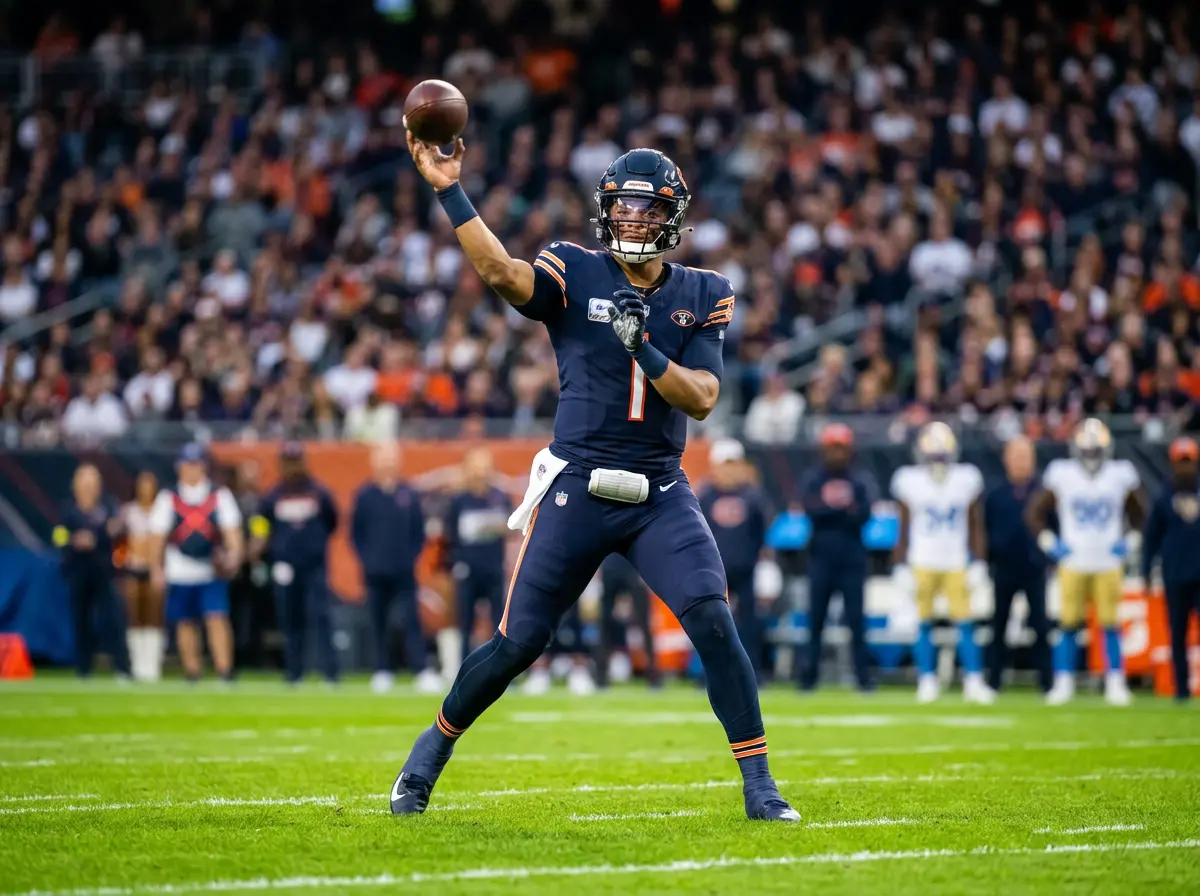
Passing yards is the deepest and most liquid player prop market at UK sportsbooks. The over/under on a starting quarterback’s passing yardage is typically set between 220 and 300 yards depending on the matchup, the game environment (indoor vs outdoor), and the expected game script. A team that is likely to be trailing will throw more, inflating the quarterback’s yardage projection. A team expected to dominate on the ground will throw less, compressing it.
Rushing yards props focus primarily on running backs but also cover dual-threat quarterbacks. Lines for primary running backs usually sit between 55 and 90 yards, depending on the player’s role, the opposing run defence, and the projected game flow. When a team is expected to build a lead and protect it, their running back’s rushing prop rises because the team will lean on the ground game to burn clock in the second half.
Receiving yards is the fastest-growing player prop category. Individual receivers are priced based on their target share, average yards per reception, and the opposing secondary’s vulnerability by position. The market has expanded beyond primary receivers to include tight ends and even running backs who catch passes out of the backfield. Some sportsbooks now offer reception count props (over/under on how many catches a player makes), which adds another layer of granularity.
Each of these markets carries wider margins than the spread or total — typically 6-10% overround compared to 4-6% on main markets. The wider margin reflects the lower liquidity and the pricing model’s relative imprecision. But wider margins do not mean worse value in every case. If your analysis is sharper than the sportsbook’s model on a specific player in a specific matchup, the margin is irrelevant because your edge exceeds it.
Researching Player Props: Matchup Data, Snap Counts, and Usage Rates
Adrian Horton, a senior trading director at theScore Bet, observed during Super Bowl LX week that bettors were targeting player prop markets ahead of the book’s adjustments. That pattern repeats throughout the regular season — the research pipeline for player props rewards bettors who assemble matchup-specific data before the sportsbook’s automated pricing catches up.
Snap count percentage is the first data point I check. A running back who plays 80% of his team’s offensive snaps has more opportunities to accumulate yards and touchdowns than one who splits time equally with a backup. Snap count data is publicly available the day after each game, and trends over a three-to-four-week window are more predictive than single-game spikes.
Target share is the receiving equivalent. A wide receiver who commands 25% of his team’s targets is priced differently than one who commands 15%. But target share alone does not capture the quality of those targets — a receiver who sees 25% of targets but runs primarily short routes will produce fewer yards per target than one who runs deep routes on 15% of targets. Average depth of target, available through advanced stats platforms, adds the context that raw target share misses.
Defensive matchup data is where most of the edge lives. Every NFL defence has positional vulnerabilities. Some allow heavy yardage to slot receivers but shut down outside threats. Others are weak against tight ends over the middle but strong against the run. Cross-referencing the opposing defence’s positional weaknesses with the specific player’s role produces a more accurate projection than the player’s season average, which smooths out matchup-specific variation.
Weather is the final variable, and it matters more for passing props than rushing props. Wind above 15 mph suppresses passing volume and accuracy, which pulls quarterback yardage lines down. Rain affects grip and route precision. Cold does not affect passing as dramatically as wind but can reduce the efficiency of the passing game at the margins. For UK bettors placing bets hours before kick-off, checking the weather forecast at the game venue is a two-minute task that can tip the balance on a borderline prop.
Player Prop Availability at UK Sportsbooks
The range of NFL player props varies significantly between UK operators. The broadest selections are available for primetime games — Sunday Night Football, Monday Night Football, and Thursday Night Football — where the handle is largest and the sportsbook invests the most trading resources. A typical primetime game might carry 30 to 50 player prop markets, covering both starting lineups in detail.
Early-window Sunday games (6pm UK time) receive fewer player props, often limited to the starting quarterbacks, primary running backs, and top two receivers on each team. Late-window and less prominent matchups may have even thinner prop coverage. If player props are central to your NFL betting strategy, concentrating your action on primetime games gives you the widest market access.
The bet builder feature at most UK sportsbooks draws heavily from the player prop market. Combining a quarterback’s passing yards over/under with a receiver’s yardage prop and the game total creates a same-game parlay that reflects a specific thesis about how the game will unfold. The correlation between these legs — a high-yardage quarterback game typically means high-yardage receiving numbers for at least one of his targets — is priced into the bet builder, but the precision of that pricing varies between operators and between games.
One trend worth noting: UK sportsbooks have steadily expanded their NFL player prop offerings over the past three seasons, partly driven by demand from bet builder usage and partly by the availability of better real-time data feeds. The gap between UK and US sportsbook prop depth, which was substantial five years ago, has narrowed to the point where UK bettors now have access to nearly the same granularity as their American counterparts on marquee games.
What NFL player props are available at UK bookmakers?
Major UK sportsbooks offer player props on passing yards, rushing yards, receiving yards, receptions, touchdowns, and sometimes more granular stats like completions and interceptions. The depth of available markets varies by game prominence — primetime games carry the widest selection, while early-window regular season matchups may have limited prop coverage.
How do I research player props for NFL betting?
Focus on snap count percentages, target share or carry volume, and defensive matchup data. Cross-reference the specific player’s role and usage trends with the opposing defence’s positional vulnerabilities. Check the weather forecast for outdoor games, as wind and precipitation particularly affect passing props. Advanced stats platforms provide the granular data that season averages miss.
Can I combine player props in a same-game parlay?
Yes. Most UK sportsbooks allow player props to be included in bet builders alongside other selections from the same game. The sportsbook adjusts the combined odds to account for correlation between legs — for instance, a quarterback’s passing yards are positively correlated with his receivers’ yardage numbers.
Published by the Betting nfl Games Online team.