NFL Moneyline Betting: Match Winner Odds and Payouts
 Available in US
I placed my first NFL moneyline bet in 2017, a tenner on the Jacksonville Jaguars to beat the Buffalo Bills in the Wild Card round. No spread to worry about, no totals to calculate — just pick a winner and wait. Jacksonville won by ten, and I remember thinking: why would anyone bother with more complicated bet types?
Nine seasons later, I understand exactly why. The moneyline is the most intuitive wager in American football — you back a team to win, full stop — but that simplicity hides a pricing structure that consistently punishes undisciplined bettors. With roughly 290 million online sports bets placed each month across UK sportsbooks, a huge chunk of NFL action lands on the moneyline. Most of it lands badly.
The problem is not the bet type itself. Moneyline is a perfectly valid market. The problem is that most punters treat it as a default rather than a deliberate choice, ignoring situations where a spread or totals bet would extract far better value from the same opinion. This piece breaks down how the moneyline actually works at UK bookmakers, when it genuinely outperforms the spread, and when it quietly drains your bankroll.
NFL Moneyline Bets: Comparing Match Winner Odds in the UK
A mate once asked me why his 1/8 moneyline ticket on Kansas City paid out less than his bus fare. That question captures the entire moneyline mechanic in miniature. When you bet the moneyline, you are backing one team to win the game outright — no margin of victory matters, no point spread applies. Win by one point or by thirty, the result is the same.
UK sportsbooks display moneyline odds in fractional or decimal format. A strong favourite might appear at 1/5 (decimal 1.20), meaning a GBP 50 stake returns GBP 60 — your original stake plus GBP 10 profit. An underdog could sit at 4/1 (decimal 5.00), turning that same GBP 50 into GBP 250 if they pull off the upset.
The bookmaker’s margin lives in the gap between the two prices. If you converted both sides of a moneyline into implied probabilities and added them together, the total would exceed 100% — that excess is the overround, typically sitting between 4% and 7% on NFL moneylines at major UK operators. A tighter overround means better value for you. A wider one means the sportsbook is taking a larger cut.
One detail that catches out newer bettors: NFL moneyline bets include overtime. If a game goes to OT and your team wins, you collect. If they lose in overtime, your bet loses. There is no “regulation time only” moneyline at most UK books unless explicitly stated as a separate market. Always check the settlement rules before confirming your slip, because the assumption varies between sports — rugby league, for instance, often settles on 80-minute results.
The mechanics are genuinely that straightforward. Where things get interesting — and where most bettors go wrong — is in understanding how favourites and underdogs are priced differently and what that means for long-term profitability.
Favourites vs Underdogs: Payout Dynamics on the NFL Moneyline
Here is a scenario I see play out every September. A casual bettor looks at the NFL schedule, spots a matchup where one team is clearly stronger, and backs the favourite on the moneyline. The favourite wins. The bettor collects a modest return. Repeat for three weeks. Week four, the favourite loses — and that single loss wipes out all three weeks of profit. This is not bad luck. This is the structural reality of moneyline pricing.
NFL favourites with odds shorter than 1/3 win roughly 75-80% of the time over a full season. That sounds like easy money until you do the maths. At 1/4 (decimal 1.25), you need to win 80% of your bets just to break even before the overround. At 1/5, you need 83%. The margin for error is razor-thin, and one upset erases multiple winning bets.
Underdogs tell the opposite story. NFL underdogs at 3/1 or longer win infrequently — maybe 20-25% of the time depending on the spread — but each win pays enough to cover several losses. The AGA estimated $30 billion in legal NFL wagers during the 2025 season, and a meaningful portion of that handle came from sharp bettors who identified underdog value that the public overlooked.
The dynamic creates a fundamental tension. Backing favourites feels safe and produces a high win rate, but the return profile is fragile. Backing underdogs feels reckless and produces a low win rate, but the return profile is resilient. Neither approach is inherently correct — what matters is whether the odds on offer accurately reflect the true probability of each outcome. When the odds overshoot in either direction, value appears.
I track every moneyline bet I place in a spreadsheet, and the pattern over nine seasons is clear: my best return-on-investment months are the ones where I backed two or three well-researched underdogs rather than loading up on short-priced favourites. The emotional comfort of a high strike rate is a trap if the maths does not support it.
When Moneyline Beats the Spread
Last November I stared at a Thursday Night Football game where the visiting team was a 2.5-point underdog on the spread at 10/11, but available at 6/5 on the moneyline. I took the moneyline. Why? Because the spread margin was so thin that the probability of winning the game outright was barely different from covering 2.5 points, yet the moneyline paid significantly more.
This is the core principle: moneyline bets on slight underdogs — teams getting 1 to 3 points on the spread — often represent better value than the spread itself. When a team is only a small underdog, the implied probability gap between “winning outright” and “losing by fewer than 3” is narrow. But the payout difference between moneyline odds and the standard -110 spread juice can be substantial.
Conversely, moneyline bets on heavy favourites almost never beat the spread. If a team is favoured by 7 or more points, the moneyline price compresses to a level where the risk-reward ratio is brutal. One upset destroys weeks of grinding. In those situations, the spread gives you a cushion that the moneyline does not, and the pricing reflects it.
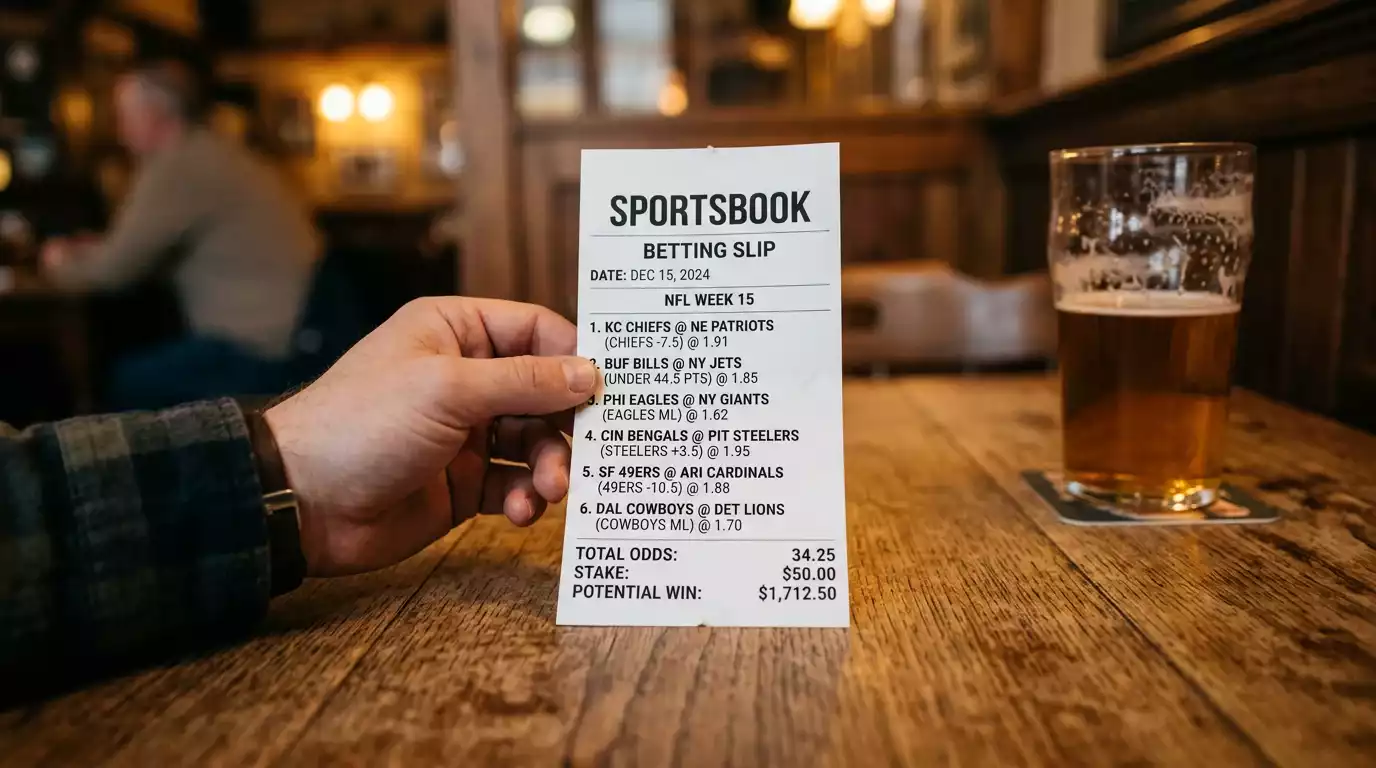
There is a middle ground worth mentioning: moneyline parlays. Some bettors combine two or three moneyline favourites into an accumulator to boost the overall return. The maths can work if the individual legs are genuinely strong, but compounding probabilities means each additional leg magnifies the bookmaker’s edge. A three-leg moneyline acca with each team at 1/3 carries an implied probability around 42% — far lower than most bettors intuit when they see three “easy” winners on the slip.
My rule of thumb after years of tracking: use the moneyline for underdogs of 3 points or fewer, use the spread for everything else. It is not a universal law, but it has kept me on the right side of the ledger more often than not.
How does the moneyline work for NFL?
A moneyline bet is a wager on which team will win the game outright. No point spread applies — the team simply needs to win by any margin. Odds are displayed in fractional or decimal format at UK sportsbooks, with shorter prices on the favourite and longer prices on the underdog. All NFL moneyline bets include overtime unless the market explicitly states otherwise.
Can I combine moneyline bets in an NFL accumulator?
Yes. Moneyline selections can be combined into an accumulator at UK sportsbooks. Each leg’s odds multiply together, increasing the potential payout but also increasing the overall risk. A single losing leg means the entire accumulator loses, so the compounding effect works against you as well as for you.
Is moneyline or spread better for NFL underdogs?
For small underdogs receiving 1 to 3 points on the spread, the moneyline often offers better value because the probability gap between winning outright and covering a tight spread is narrow, while the payout difference can be significant. For larger underdogs, the spread provides a points cushion that typically represents a better risk-adjusted proposition.
Written by the editors at Betting nfl Games Online.