Super Bowl Betting UK: Analysing Pre-Game and Prop Markets
 Available in US
Table of Contents
- Super Bowl Betting Markets: Prop and Outright Odds in the UK
- Super Bowl Prop Bets: From MVP to Coin Toss
- Super Bowl Odds: How Lines Move from Conference Finals to Kick-Off
- Super Bowl Free Bets and Promotions at UK Sportsbooks
- Watching and Betting the Super Bowl from the UK
- Lessons from Past Super Bowls: What the Data Tells Bettors
- Frequently Asked Questions
Every February, I block out the entire Sunday night into Monday morning. Phone charged, second screen ready, three sportsbook apps open. The Super Bowl isn’t just a game for me — it’s the culmination of months of research, tracked line movements, and prop-market analysis. And I’m far from alone in treating it that way.
The American Gaming Association projects a record $1.76 billion in legal wagers on Super Bowl LX in February 2026 — a leap from $1.39 billion on the previous year’s game. Across the Atlantic, 137.7 million Americans tuned into Super Bowl LIX, and the event’s gravitational pull extends well beyond US borders. The UK’s 13 million NFL fans represent the league’s largest European audience, and a significant portion of them place at least one bet on the championship game. Some estimates suggest 68 million people wagered on the most recent Super Bowl globally, many of them casual bettors who only touch the NFL once a year.
For UK sportsbooks, the Super Bowl is the single biggest American sports betting event on the calendar. Market depth expands dramatically in the two weeks between the conference championship games and kick-off: prop bets multiply, futures prices firm up, and promotional activity peaks. If there’s one NFL game worth understanding from a betting perspective, this is it.
What follows is my complete breakdown of Super Bowl betting from a UK perspective. Markets, props, odds movement, promotions, viewing logistics, and historical patterns — everything you need to approach the biggest game of the year with the same level of preparation I bring after nine seasons of covering NFL wagering.
Super Bowl Betting Markets: Prop and Outright Odds in the UK
No other single NFL game generates as many betting markets as the Super Bowl. During the regular season, a standard game might offer 80 to 120 markets at a major UK sportsbook. The Super Bowl routinely exceeds 400 — and some operators push past 500 individual lines for the championship game.
The foundation is the same trio you see in every NFL game: point spread, moneyline, and total (over/under). These markets are live weeks before kick-off, with opening lines appearing shortly after the conference championships conclude. The spread and total are the most liquid markets, attracting the heaviest volume from both sharp and recreational bettors. If you only place one Super Bowl bet, it will almost certainly be on one of these three.
Outright and futures markets close at kick-off, but they’re available long before. Super Bowl winner odds open before the season even starts — you can back a team at 50/1 or longer in the summer and watch the price shorten (or drift) as the season unfolds. Conference winner bets, MVP futures, and season-win totals all feed into the Super Bowl narrative and offer their own wagering angles. Legal NFL handle across the United States reached $30 billion during the 2025 season, and a meaningful share of that volume landed on futures that ultimately resolved in the Super Bowl.
Game-specific markets go deeper than the standard three. You can bet on the first scoring method (touchdown, field goal, safety), the first team to score, the team leading at halftime, the exact score at the end of each quarter, and whether the game will go to overtime. Some sportsbooks offer margins of victory in bands — win by 1 to 6 points, 7 to 12, 13 to 18, and so on — which provide higher odds for more precise predictions.
Then there are the markets that only exist because it’s the Super Bowl. Coin toss (heads or tails), national anthem duration (over or under a set time), Gatorade colour (what will the winning team pour on their coach?), and halftime show specials (first song played, wardrobe details) all generate serious volume. These novelty markets are entertainment-grade — the odds carry wide margins and there’s no analytical edge to be found — but they’re part of the cultural fabric of Super Bowl Sunday and UK sportsbooks lean into them heavily.
For UK bettors looking to build a structured Super Bowl portfolio, my recommendation is a tiered approach. One or two core bets on the spread or total, where your analysis of the teams’ strengths and weaknesses has the most impact. One or two player prop bets where you’ve identified a statistical mismatch. And, if you’re feeling festive, one novelty prop for entertainment value with a stake you’d happily lose. That structure keeps you focused on the markets where skill matters while still enjoying the spectacle.
Super Bowl Prop Bets: From MVP to Coin Toss
I once spent three hours building a prop-bet card for the Super Bowl, cross-referencing quarterback red-zone tendencies, receiver target shares, and defensive pressure rates. Then I watched a friend win sixty quid betting on the colour of the Gatorade shower. That’s Super Bowl props in a nutshell — a spectrum from deeply analytical to gleefully random.
Player-performance props are the serious end. Quarterback passing yards (over/under a set number), rushing yards for the lead running back, receptions for the top receiver, and anytime touchdown scorer are the bread-and-butter markets. These are priced using extensive statistical models, and they’re the props where research actually translates into edge. Adrian Horton, Senior Director of North American Sports Trading at theScore Bet, has observed how bettors pile into certain teams across all their prop markets — not just spread and moneyline, but touchdown scorer and player-prop markets too. That clustering effect can push popular-side props to less favourable odds, creating value on the other side.
Game-level props occupy the middle ground. Will there be a safety? Will either team score in every quarter? Will the first score be a touchdown or a field goal? How many total sacks will be recorded? These markets require a blend of game knowledge and statistical awareness. A matchup between a team with a dominant pass rush and a team with a suspect offensive line, for instance, pushes the sacks total higher — but the market often prices this in before casual bettors notice.
Novelty props are the unserious end, and they’re wildly popular during the Super Bowl. The coin toss is a literal 50/50 proposition priced at 10/11 each side (the margin is the sportsbook’s only edge). National anthem duration is usually set with an over/under in the range of 90 to 120 seconds, depending on the performer. The Gatorade colour — orange, blue, clear, red, yellow, or green — has become a meme market with surprisingly variable odds based on historical patterns and social-media speculation.
My approach to Super Bowl props is straightforward: spend 80% of your prop-betting time and stake on player-performance markets where your analysis can generate an edge, and cap novelty props at a small, predetermined amount. The novelty markets are fun — they genuinely add to the Super Bowl experience, especially if you’re watching with friends — but they’re structurally disadvantaged. The margins are wider, the outcomes are random, and no amount of analysis will tell you whether the Gatorade will be orange or blue.
Super Bowl Odds: How Lines Move from Conference Finals to Kick-Off
The two-week window between the conference championships and the Super Bowl is the most intensely analysed period in sports betting. Every piece of injury news, every practice report, every media interview gets dissected for its impact on the line. I’ve watched Super Bowl spreads move by three or more points during this window — and the direction of the move tells you a story about where the sharp money is landing.
Opening lines typically appear within minutes of the conference championship results being finalised. The initial spread reflects the oddsmakers’ power ratings adjusted for the specific matchup, and it’s often the “truest” number in terms of pure analytical input — before public money, media narratives, and promotional activity start distorting the picture.
The first 48 hours are dominated by sharp bettors. Professional syndicates and respected individual handicappers who’ve been modelling the playoffs place their bets early, moving the line toward what the market considers the efficient price. If the opener is -2.5 and sharp money pushes it to -3.5 within two days, the market is signalling that the favourite is being undervalued. This early movement is the most informative signal available.
The following week sees recreational volume build as casual bettors — many of whom only wager on the Super Bowl once a year — enter the market. The Super Bowl audience dwarfs regular-season figures by an order of magnitude, which means the proportion of first-time or once-a-year bettors is enormous. Recreational money tends to favour the favourite and the over, which can push the line further from its “true” value. Sharps who disagree with the public-driven move sometimes re-enter, creating counter-movements in the final days before kick-off.
The last 24 to 48 hours before kick-off are the most volatile. Late injury news (a starting cornerback ruled out, a quarterback’s thumb injury confirmed) can shift the spread dramatically. Weather forecasts for outdoor venues — rain, wind, extreme cold — move the total more than the spread but affect both. And the sheer volume of last-minute bets from millions of casual punters creates turbulence in the line.
For UK bettors, the tactical lesson is clear. If you have a strong opinion formed through your own analysis, bet early — within the first 48 hours of the line’s release — before recreational money muddies the price. If you prefer to follow the market’s wisdom, wait until 24 hours before kick-off when the closing line is at its most efficient. The one approach I’d discourage is betting during the middle of the two-week window, when the line is at its least stable and the signal-to-noise ratio is lowest.
Super Bowl Free Bets and Promotions at UK Sportsbooks
The Super Bowl is the promotional peak of the NFL calendar for UK sportsbooks. Every major operator runs some form of enhanced offer — odds boosts on the moneyline, free bets for new sign-ups, accumulator insurance on multi-leg props, or enhanced each-way terms on outright markets. The volume of offers can be overwhelming, and not all of them represent genuine value.
What’s changed since January 2026 is the regulatory environment governing these promotions. UKGC rules introduced on 19 January 2026 banned mixed bonuses — operators can no longer bundle casino incentives with sports betting offers in a single promotion. The same regulations capped wagering requirements at a maximum of ten times the bonus amount, which is a significant improvement for bettors. Previously, some operators imposed 30x or 40x playthrough requirements, making it nearly impossible to extract value from a free bet. Under the new rules, a ten-pound free bet with a 10x requirement means you need to wager one hundred pounds before withdrawing any winnings — still substantial, but far more realistic than the old regime.
The marketing consent rules that took effect in May 2025 also changed how you receive these offers. Operators must now obtain explicit consent for each product and communication channel separately — you might opt in to email promotions for sports betting but not for casino, or accept push notifications but not SMS. This means your exposure to Super Bowl promotions depends on the permissions you’ve granted, and it’s worth reviewing your notification settings in advance to ensure you’re seeing the relevant offers.
My approach to Super Bowl promotions is utilitarian. I scan every offer from every sportsbook where I hold an account, assess the wagering requirements and restrictions (minimum odds, market limitations, expiry dates), and only claim offers where the effective value is positive after accounting for the playthrough. A “bet ten, get ten” free bet with a 10x wagering requirement and minimum odds of 1/2 on each qualifying bet is straightforward to evaluate. A “50% deposit bonus up to fifty pounds with 10x wagering on accumulators of four legs or more at combined odds of 3/1+” is considerably harder to extract value from.
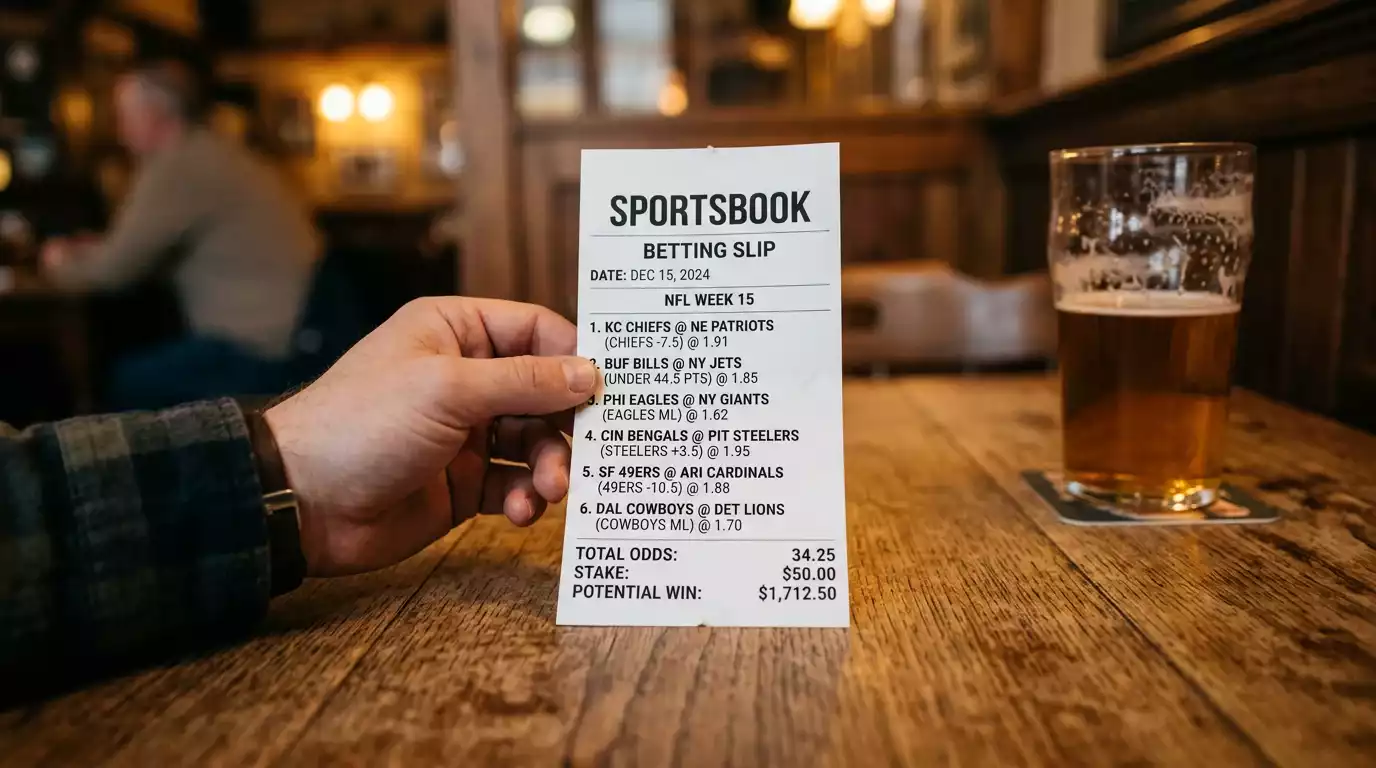
One practical tip: don’t let promotions dictate your betting. If you’ve analysed the Super Bowl and your best bet is the under at 43.5, don’t switch to a four-leg prop accumulator just because there’s an acca bonus attached. The promotion isn’t worth it if it pushes you into a bet you wouldn’t otherwise place. Take the offers that align with your existing plan and ignore the rest.
Watching and Betting the Super Bowl from the UK
Super Bowl Sunday is really Super Bowl Monday morning in the UK. Kick-off typically lands around 23:30 GMT, with the game finishing between 03:00 and 04:00 depending on the pace of play and the length of the halftime show. For UK bettors who want to watch and wager simultaneously, that means planning for a late night — or taking Monday off.
Broadcast coverage in the UK has expanded significantly. Sky Sports has long been the primary NFL broadcaster, and their Super Bowl coverage includes pre-game analysis, live commentary, and post-game wrap-ups. The BBC has also carried the Super Bowl on free-to-air television in recent years, making the game accessible to viewers without a pay-TV subscription. Amazon Prime Video’s growing NFL portfolio — their Thursday Night Football averaged 15.33 million viewers in the 2025 season, up 60% from the 2022 launch of their exclusive package — adds another streaming option, though their Super Bowl involvement has been limited to date.
For in-play betting, the viewing setup matters. You need a broadcast with minimal delay — ideally a live TV feed rather than an internet stream, which typically lags by 15 to 60 seconds. That delay can be the difference between placing a bet at the right price and seeing the odds shift before your wager is confirmed. I use Sky Sports on the television for the real-time picture and keep the sportsbook app on my phone for betting. The two-screen setup is the standard for serious Super Bowl in-play wagering in the UK.
The Super Bowl watch party is a fixture of UK NFL culture, and it’s worth acknowledging that betting in a social setting carries its own dynamics. Group pressure — friends egging you on to back the underdog, collective enthusiasm for a prop bet on the halftime show — can lead to impulsive wagers. Decide your bets before you arrive at the party, and treat any additional bets placed during the game as entertainment, not strategy. The 13 million NFL fans in the UK have built a vibrant community around the Super Bowl, and there’s nothing wrong with joining the fun — just keep your serious bankroll separate from your social-betting budget.
Lessons from Past Super Bowls: What the Data Tells Bettors
I keep a spreadsheet of every Super Bowl result, spread, total, and key prop outcome going back 25 years. Patterns in a single game played once a year are inherently noisy — the sample size is tiny compared to regular-season analysis — but some tendencies have held up long enough to inform my approach.
The first is that underdogs cover more often than the public expects. Over the past two decades, Super Bowl underdogs have covered the spread roughly 55% of the time. That’s a modest edge, but it’s persistent, and the reason is straightforward: the Super Bowl attracts a flood of recreational money that disproportionately backs the favourite, pushing the line beyond its fair value. Bill Miller, president and CEO of the American Gaming Association, has described how no single event unites fans like the Super Bowl — and that unity translates into lopsided betting volume that sharps exploit by taking the other side.
The second pattern concerns the total. Super Bowls have historically trended toward the under, particularly in games between two strong defensive units. The explanation is partly psychological (both coaching staffs play conservatively in the biggest game of the year, favouring field position and possession over aggressive play-calling) and partly structural (the two-week preparation window allows defensive coordinators to install more complex schemes than they’d use during a normal game week). My default lean on the Super Bowl total is toward the under unless the matchup features two high-octane offences with average defences.
Third: the MVP market is dominated by quarterbacks. The winning team’s quarterback has been named Super Bowl MVP roughly 55% of the time over the past 30 years. That concentration makes sense — the quarterback touches the ball on every offensive play and is the most visible performer in a win — but it also means the market prices quarterback MVPs relatively efficiently. The value in the MVP market, when it exists, is usually found on non-quarterback candidates: a dominant defensive player, a running back who controls the clock, or a wide receiver who has a historic performance. These candidates are priced at longer odds because they need an unusual game script to win, but when the script materialises, the payout is substantial.
Fourth: first-quarter scoring has increased over the past decade, largely because teams now script their opening drives more aggressively and defences take longer to adjust to unfamiliar offensive formations. First-quarter totals in recent Super Bowls have trended above their pre-game lines more often than not, and the first-team-to-score market has rewarded the team that receives the opening kick-off at a higher rate than coin-flip probability would suggest. It’s a narrow angle, but for bettors looking beyond the core markets, it’s worth examining.
The overriding lesson from past Super Bowls is humility. This is one game, played once a year, with unique emotional and logistical conditions that don’t exist in the regular season. Historical patterns offer directional guidance, not certainty. I use them to break ties in my analysis — if my model says the game is a coin flip, I’ll lean toward the underdog covering and the under hitting, because history says those tendencies exist. But I’d never bet a Super Bowl solely because “underdogs cover 55% of the time.” That’s a tendency, not a strategy.
Frequently Asked Questions
When can I start betting on the next Super Bowl in the UK?
Super Bowl winner futures are available at most UK sportsbooks year-round. You can bet on the next Super Bowl champion as early as the day after the current Super Bowl concludes, with odds updating throughout the off-season, pre-season, and regular season. The specific game markets — spread, total, and props — appear after the conference championship games, roughly two weeks before kick-off.
What are the most popular Super Bowl prop bets?
The most heavily wagered Super Bowl props are anytime touchdown scorer, quarterback passing yards over/under, and MVP winner. Novelty props including the coin toss result, national anthem duration, and Gatorade colour also attract enormous volume, particularly from casual bettors who only wager on the Super Bowl once a year.
How do Super Bowl odds change in the weeks before the game?
The spread typically moves most in the first 48 hours after the conference championships, driven by sharp bettors. Recreational money then builds throughout the following week, often pushing the favourite’s line higher and the total upward. Late injury news and weather forecasts can trigger final adjustments in the 24 to 48 hours before kick-off. The closing line is generally considered the most efficient price.
Are Super Bowl free bets available at UK sportsbooks?
Yes, the Super Bowl is the peak promotional period for NFL betting at UK sportsbooks. Common offers include free bets for new customers, odds boosts on the moneyline or specific props, and accumulator insurance. Since January 2026, UKGC rules cap wagering requirements at ten times the bonus amount and ban mixed sports-and-casino promotions, making it easier to assess the genuine value of each offer.
Prepared by the Betting nfl Games Online editorial staff.