NFL Betting for Beginners UK: Sportsbook Setup and Wagering
 Available in US

NFL Betting for Beginners: Opening Accounts and Placing Wagers
When I started betting on the NFL in 2017, I made every mistake possible in the first month. I backed teams based on their uniforms. I placed parlays without understanding how odds multiplied against me. I bet on Monday Night Football after midnight when I was half-asleep and making decisions I would not have made at noon. The stakes were low, but the education was expensive in a different way — it took me a full season to unlearn the habits I picked up in those first careless weeks.
More than 13 million people in the UK now follow the NFL, and roughly 4 million of them are active, engaged fans who watch games regularly. Many of those fans have never placed a bet on American football. The sport’s betting markets look different from the football, horse racing, and cricket markets that dominate UK sportsbooks, and the terminology — spread, moneyline, over/under — can feel alien at first glance. This guide is built for that specific moment: you follow the NFL, you want to start betting on it, and you want to avoid the mistakes I made.
Registering at a UKGC-Licensed Sportsbook
Before you place a single bet, you need an account at a sportsbook licensed by the UK Gambling Commission. There are roughly 12.7 million active online betting accounts in the UK at any given time, and the process of creating one is straightforward but involves identity verification that some first-time bettors find surprising.
Registration requires your full name, date of birth, address, and a funding method — debit card, PayPal, or another accepted payment option. Credit cards are banned for gambling in the UK. Once you submit your details, the operator verifies your identity against public databases. This may happen instantly, or the sportsbook may request a photo of your driving licence or passport. This is not optional — it is a legal requirement under the Gambling Act, and any sportsbook that skips this step is operating illegally.
I recommend starting with one account rather than opening several at once. Get comfortable with one sportsbook’s NFL interface, learn where markets are displayed, understand how the bet slip works, and place a few small bets before expanding to additional operators. The temptation to sign up everywhere for welcome bonuses is real, but it scatters your attention and your bankroll when what you need as a beginner is focus.
Placing Your First NFL Bet: A Walkthrough
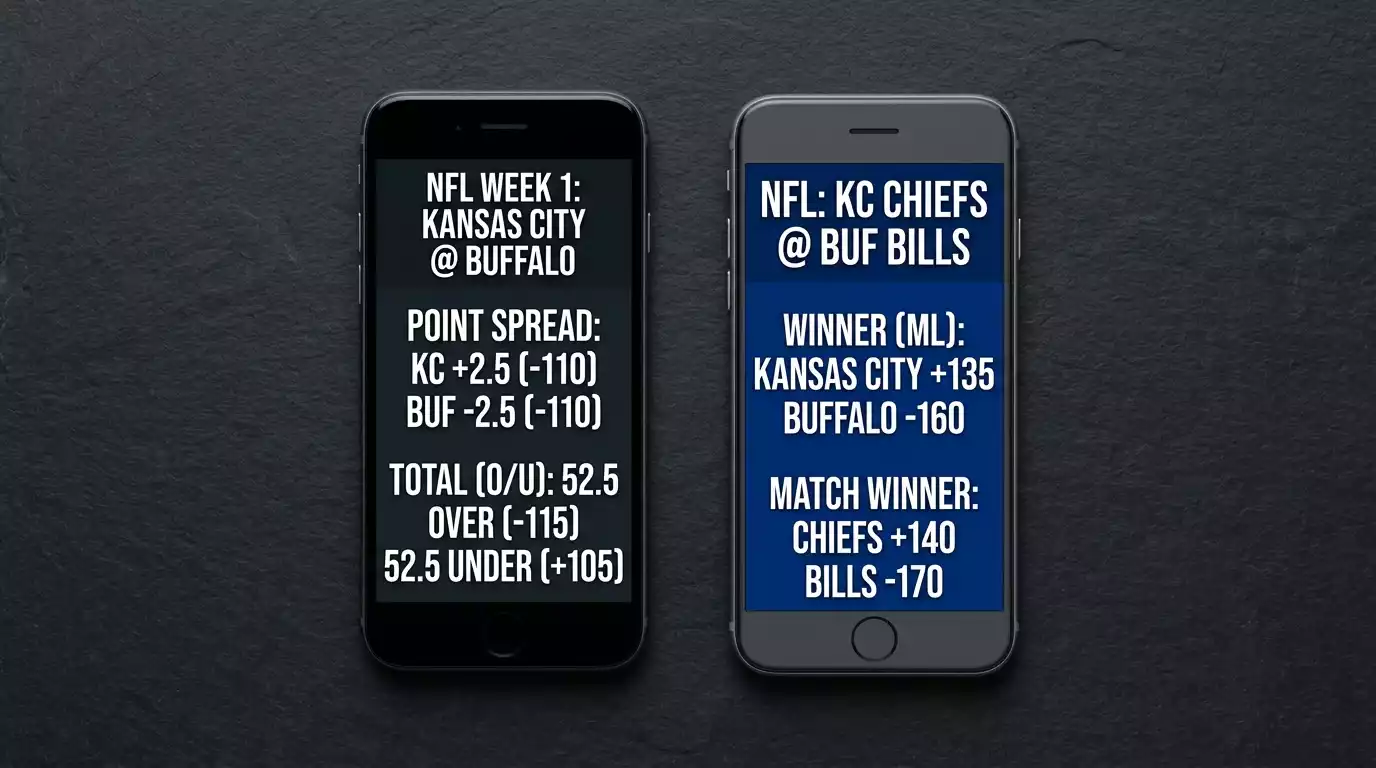
Your first NFL bet should be boring. I mean that sincerely. Pick a Sunday game between two teams you recognise. Navigate to the NFL section of your sportsbook. You will see the matchup listed with three main markets: the spread (point handicap), the moneyline (who wins), and the total (over/under combined score).
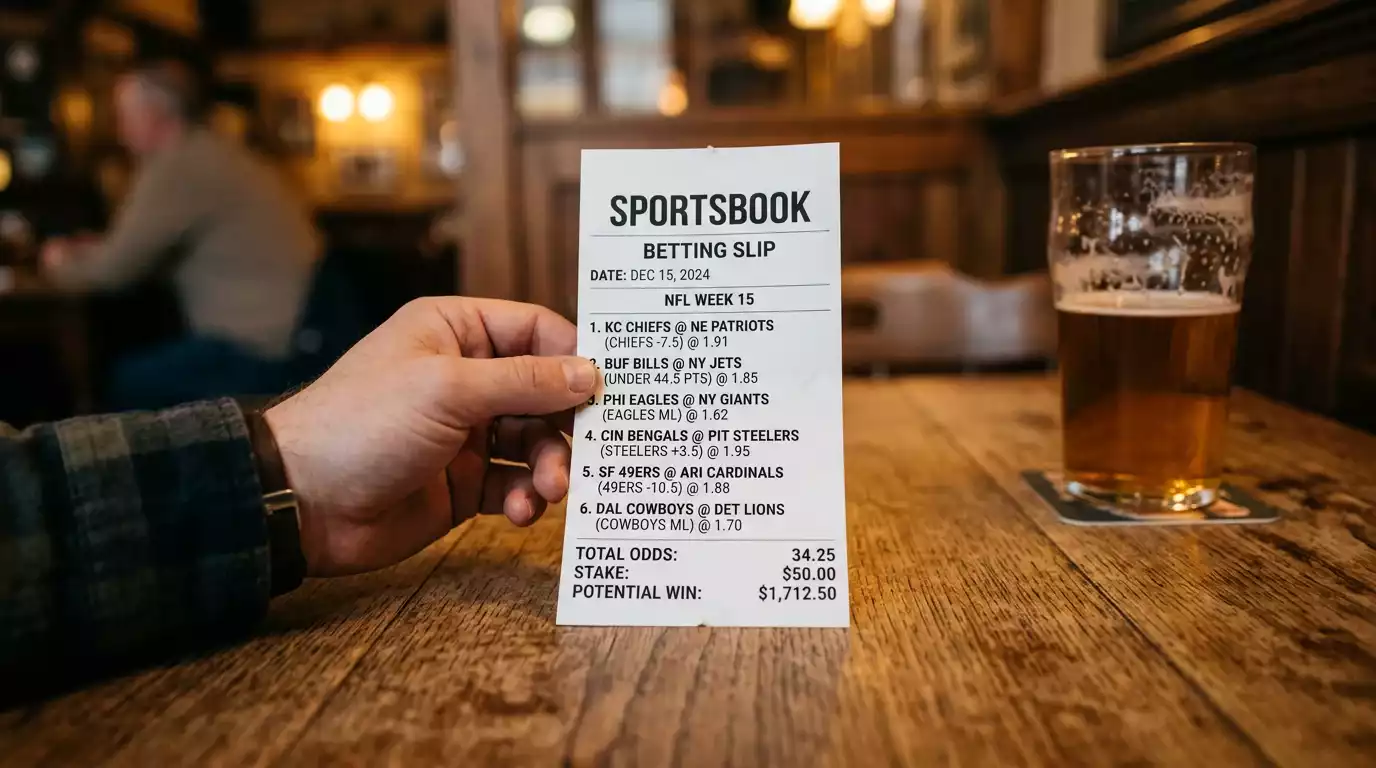
For your first bet, use the moneyline. Tap the team you think will win. Their odds appear on your bet slip — in fractional format by default at most UK books, though you can switch to decimal in the settings. Enter a stake. Start small: GBP 2 to GBP 5. Confirm the bet. That is it.
Watch the game. Notice how your emotional response changes when you have money on the outcome. This is the genuine value of a first bet — not the potential winnings, which at a GBP 2 stake will be modest regardless of the odds, but the experience of understanding how a financial stake changes how you watch and process the game. Every bettor I know describes this shift, and it is important to experience it consciously rather than letting it sneak up on you with larger stakes later.
After the game, review the result. Did your team win? By how much? Would the spread bet have won too? Would the total have gone over or under? Go back to the sportsbook and check what the pre-game lines were on those markets. This post-game review, done consistently, builds the pattern recognition that separates informed bettors from guessers.
The Three Core NFL Bets Every Beginner Should Know
The spread, the moneyline, and the total are the foundation of NFL betting. Every other market — props, futures, teasers, bet builders — is built on top of these three. Understanding them thoroughly before moving to more complex bet types is not optional; it is structural.
The moneyline is the simplest: pick the winner. The odds tell you how much you win relative to your stake. A team at 1/2 (decimal 1.50) returns GBP 1.50 for every GBP 1 staked, including your original stake. A team at 3/1 returns GBP 4. The lower the odds, the more likely the sportsbook believes that team will win.
The point spread adds a handicap. If a team is -6.5, they need to win by 7 or more points for a spread bet to pay out. If a team is +6.5, they can lose by up to 6 points and the bet still wins. The spread exists to create a roughly even contest for betting purposes — both sides of the spread are typically priced near 10/11 (decimal 1.91), meaning you risk slightly more than you stand to win. For a deeper dive into how spreads work and why certain numbers matter more than others, the NFL odds guide covers the mechanics in detail.
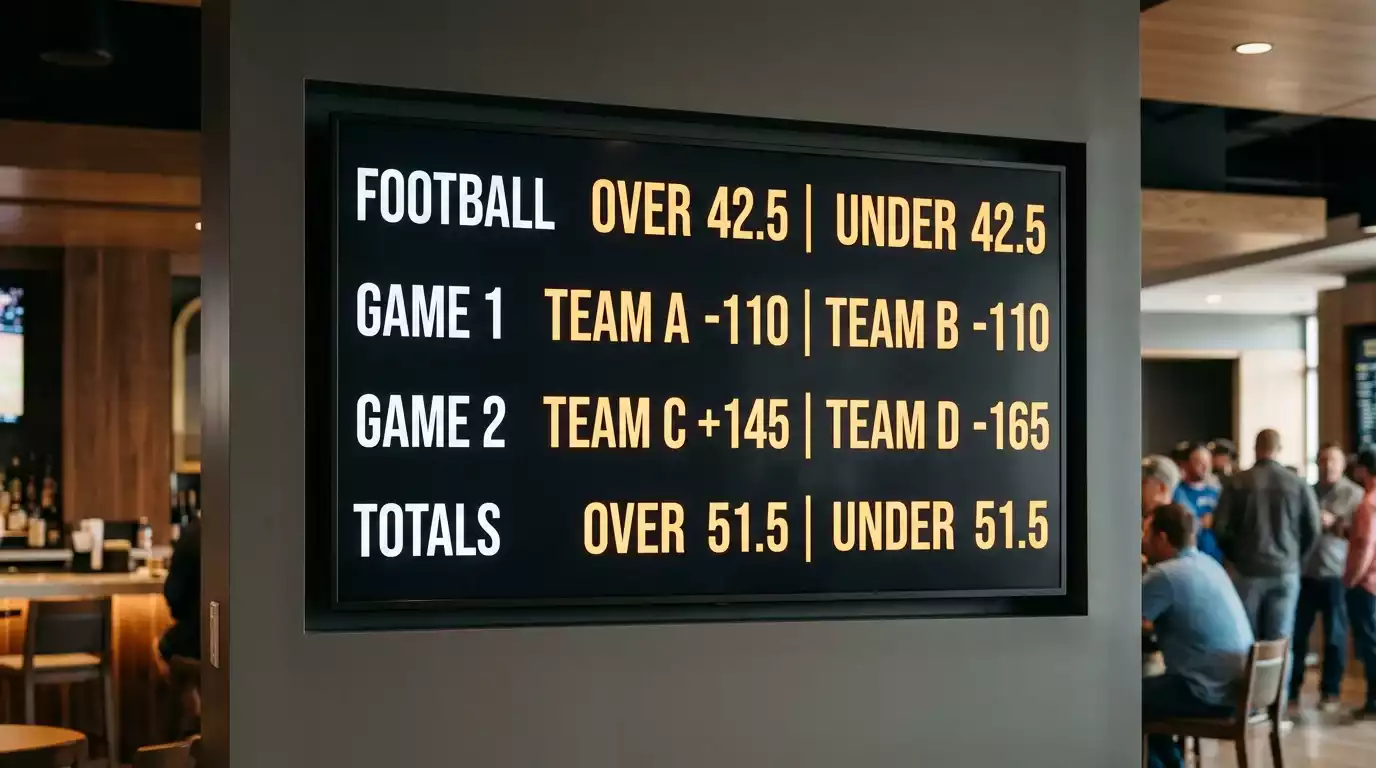
The over/under (total) asks whether the combined score of both teams will be above or below a number set by the sportsbook, typically in the low-to-mid 40s for an average NFL game. You do not need to pick a winner — just whether the game will be high-scoring or low-scoring. Totals are often the most accessible market for beginners because they reward understanding of general game conditions (weather, pace, defensive quality) rather than deep team-specific knowledge.
Five Common Mistakes New NFL Bettors Make
I have watched friends walk each of these paths, and I walked most of them myself. They are not moral failures — they are predictable consequences of entering a complex market without a framework.
Betting every game is the first and most common mistake. The NFL offers 16 games most Sundays during the regular season, plus Thursday and Monday night games. New bettors feel compelled to have action on all of them. The result is a scatter-shot approach where you are betting on matchups you have not researched, against a sportsbook that has priced every one of those games with professional-grade models. Selectivity is the single most important discipline in NFL betting. I rarely bet more than four games in a week, and some weeks I bet on none.
Chasing losses is the second. You lose your first three bets on Sunday and decide to go bigger on the late game to recover. This is not a strategy — it is an emotional response that compounds your losses. Set a weekly budget before the season starts and do not exceed it, regardless of results.
Ignoring bankroll management is the third. Bill Miller, the AGA’s president and CEO, has described legal sports betting as something that enhances the fun and friendly competition of NFL games. That description only holds if you are betting amounts you can genuinely afford to lose. A common guideline is to risk no more than 1-2% of your total bankroll on any single bet. If your bankroll is GBP 200, that is GBP 2 to GBP 4 per bet. It feels small until you realise it is designed to keep you solvent through a full 18-week season.
Betting with your heart is the fourth. If you support the Kansas City Chiefs — and they are the most-searched NFL team among UK fans — you will naturally overestimate their chances in every game. Emotional attachment is a bias, and sportsbooks profit from it. Bet the data, not the jersey.
The fifth mistake is moving to complex bet types too quickly. Accumulators, teasers, bet builders, and player props all offer more engagement and bigger potential payouts than simple spread or moneyline bets. They also carry higher margins, more complexity, and more ways to lose. Master the three core markets first. Give yourself a full season of singles before adding complexity.
Which NFL team should I bet on as a beginner?
No team is inherently a good or bad bet — value depends on the odds, the matchup, and the conditions, not the team’s brand or your personal allegiance. As a beginner, focus on games where you have watched both teams play and have a genuine opinion, rather than betting on names you recognise. Avoid backing your favourite team on instinct — emotional attachment creates bias that sportsbooks exploit.
How much should I bet on NFL games for the first time?
Start with small stakes: GBP 2 to GBP 5 per bet. The purpose of your first bets is to learn the mechanics and understand how having money on a game changes your experience, not to generate profit. A common bankroll guideline is to risk no more than 1-2% of your total betting budget on any single wager.
Do I need to understand American football to bet on the NFL?
A basic understanding of scoring, game structure, and key positions helps significantly. You do not need to be an expert, but knowing that a touchdown is worth 6 points plus a conversion attempt, that games last four quarters of 15 minutes, and that the spread reflects expected margin of victory will make your betting decisions far more informed than guessing.
Created by the ”Betting nfl Games Online” editorial team.