NFL Odds Boosts UK: Evaluating Enhanced Sportsbook Offers
 Available in US
Every Thursday during the NFL season, my phone fills with push notifications from sportsbook apps offering boosted odds on the evening’s game. “Patrick Mahomes to throw 2+ TDs — was 4/6, now Evens!” The graphics are slick, the urgency is real, and the implied message is clear: this is a gift, take it before it disappears. But after nine seasons of cataloguing these offers, I can tell you that roughly half of NFL odds boosts at UK sportsbooks represent genuine value, and the other half are marketing dressed up as generosity. The difference between the two is knowable, measurable, and worth understanding before you stake a single pound on a boosted price.
Since 1 May 2025, UK operators have been required to obtain explicit consent for marketing communications on each product and channel separately — a UKGC reform designed to curb aggressive promotional tactics. Odds boosts exist in a grey area: they are promotional pricing, but they appear within the sportsbook interface rather than as outbound marketing messages. The regulatory environment has made operators more careful about how they present boosts, but the fundamental economics have not changed. Boosts are a customer acquisition and retention tool, funded by the sportsbook’s marketing budget, and their value to you depends entirely on whether the boosted price exceeds the fair-value odds for the selection.
NFL Odds Boosts: Evaluating Enhanced Prices at UK Sportsbooks
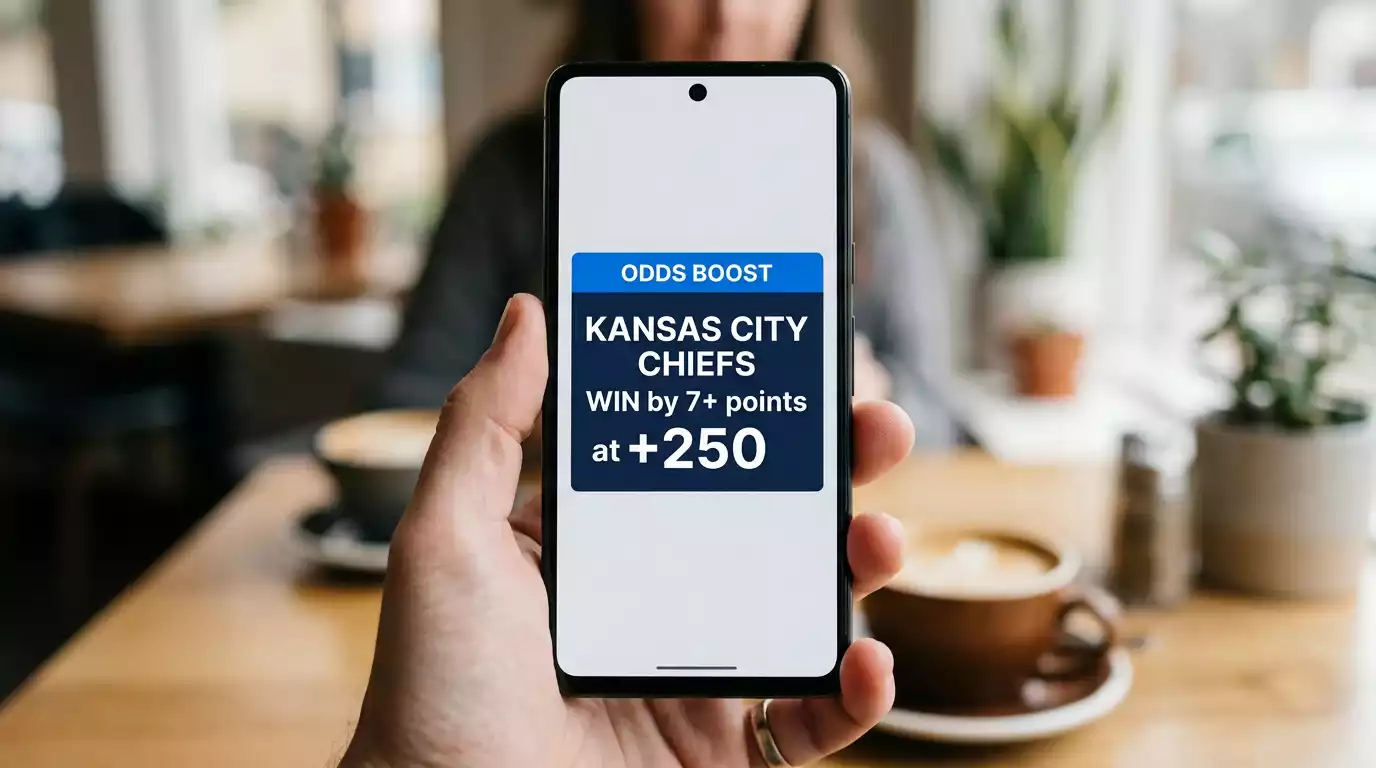
An odds boost is a promotional enhancement to the odds on a specific selection or combination of selections. The sportsbook takes the standard market price and increases it — sometimes modestly, sometimes dramatically — for a limited period or a limited number of customers. The difference between the boosted price and the standard price is the sportsbook’s promotional expenditure on that offer.
NFL odds boosts at UK sportsbooks typically fall into three categories. The first is single-selection boosts: a moneyline, spread, or total bet on a specific game is offered at enhanced odds. For example, a team might be priced at 4/7 on the standard moneyline but offered at 4/5 as a boost. The enhancement is real — your potential payout increases — but the question is whether 4/5 is actually a fair price or merely a less-unfair price than 4/7.
The second category is multi-selection boosts: the sportsbook pre-builds a parlay or accumulator and offers it at a price higher than the standard combined odds. “Chiefs to win AND Mahomes 250+ passing yards AND over 48.5 total — boosted to 7/2!” These are the most visually appealing boosts because the headline odds look generous, but they are also the hardest to evaluate because you need to assess the fair probability of each individual leg and their correlation.
The third category is profit boosts: rather than enhancing the odds on a specific selection, the sportsbook offers a percentage increase on whatever NFL bet you choose. “50% profit boost on any NFL bet this weekend, max stake GBP 10.” These are the most transparent form of boost because the value is a simple calculation — your profit is multiplied by 1.5, subject to the stake and payout caps.
Nearly all odds boosts carry restrictions: maximum stake (often GBP 10 to GBP 25), maximum payout, one per customer, time-limited availability, and exclusion from cash-out or accumulator use. The restrictions are where much of the value leaks away. A boost that offers 5/1 on a selection you would normally see at 3/1 sounds extraordinary — until you notice the GBP 10 maximum stake, which caps your potential additional profit at GBP 20.
How to Tell if an NFL Odds Boost Has Real Value
The evaluation process is the same one I use for any NFL bet: calculate the implied probability of the boosted price and compare it to your estimate of the true probability. If the boosted price implies a lower probability than your assessment, the boost has value. If it does not, the boost is a worse version of a bet you would not have placed at the standard price either.
Start with the boosted odds. Convert them to implied probability. For a boost from 4/6 to Evens (1/1), the implied probability moves from 60.0% to 50.0%. If you believe the true probability of the selection is 55%, the standard price at 4/6 (implying 60%) is a bad bet, but the boosted price at Evens (implying 50%) is a good bet. The boost has converted a negative-expectation wager into a positive-expectation wager. That is genuine value.
Now compare with the un-boosted market. William Hill controls 37.83% of PPC click-through in UK sports betting, and bet365 holds 16.2% — but pricing varies between operators. Before claiming a boost, check the standard price at two or three other sportsbooks. If the boosted price at operator A is 5/4, but operator B already offers 11/8 (which is higher) without any boost, the promotion is not delivering value relative to the available market. This happens more often than you might expect, particularly on pre-built multi-selection boosts where each leg’s price may be below market standard to begin with.
For multi-selection boosts, the evaluation is harder but follows the same logic. Break the boost into individual legs, find the standard price for each leg at the boosting sportsbook and at competitors, calculate the combined fair-value odds, and compare to the boosted price. If a three-leg boost offers 7/2 but the fair combined odds (using standard market prices) would be 3/1, the boost adds roughly 17% value. If the fair combined odds would be 4/1, the boost is actually below fair value despite the marketing.
Correlation is the hidden variable in multi-selection boosts. If the legs are positively correlated — “Team A to win AND over 48.5 total” are correlated because Team A winning often involves scoring a lot of points — the combined probability is higher than the product of the individual probabilities. Sportsbooks sometimes price multi-selection boosts as if the legs are independent, which understates the true probability and makes the boost appear more generous than it is. A genuinely sharp bettor evaluates correlation before deciding whether a multi-leg boost has value.
UKGC Rules on Enhanced Odds and Promotional Pricing
The UKGC’s 2025-2026 reforms have tightened the regulatory framework around promotional pricing, though odds boosts themselves remain permitted. The key changes that affect NFL odds boosts are the wagering requirement cap and the marketing consent rules.
Since 19 January 2026, the maximum wagering requirement on any bonus or promotional offer is capped at x10. This applies primarily to free bets and deposit bonuses rather than odds boosts (which are settled at the enhanced price without additional wagering requirements), but it signals the UKGC’s broader direction: promotional offers must be transparent, fair, and not designed to create barriers to withdrawal.
The marketing consent rules introduced on 1 May 2025 require operators to obtain explicit opt-in consent for promotional communications by product and channel. If you have not opted in to receive promotions from a sportsbook, you should not receive push notifications about NFL odds boosts. In practice, most sportsbooks surface boosts within the app interface regardless of marketing consent, treating them as in-product pricing rather than outbound marketing. The regulatory distinction is ongoing, and further UKGC guidance may tighten how boosts are presented.
The broader regulatory trend is toward greater transparency in promotional pricing. Operators may eventually be required to display both the standard and boosted price side by side, making it easier for bettors to assess the true value of an enhancement. Until that happens, the responsibility for evaluation sits with you — and the method described above is your best tool for distinguishing genuine value from promotional noise.
The most disciplined approach to NFL odds boosts is to treat them as another data point in your odds comparison process rather than as a standalone reason to bet. If you would not have placed the bet at the standard price, a modest boost probably does not change the calculus. If you were already planning to bet and the boost improves your expected value, take it. The sportsbook’s marketing budget should work for you, not guide your decision-making.
What is an NFL odds boost?
An odds boost is a promotional enhancement where a UK sportsbook increases the odds on a specific NFL selection or combination of selections beyond the standard market price. The enhancement is typically available for a limited time, with maximum stake and payout caps. Boosts can apply to single bets, pre-built multi-selection parlays, or as percentage profit increases on any qualifying NFL bet.
How do I tell if an odds boost is genuine value?
Convert the boosted odds to implied probability and compare it to your estimate of the true probability of the outcome. Also check the standard price for the same selection at two or three other UK sportsbooks — if the boosted price at one operator is still lower than the un-boosted price at another, the promotion is not delivering genuine value relative to the available market.
Are there limits on NFL odds boost stakes?
Almost always. UK sportsbooks typically cap odds boost stakes between GBP 10 and GBP 25, with maximum payout limits as well. The restrictions are stated in the terms and conditions of each promotion. These caps limit the total value you can extract from any single boost, so factor the maximum potential profit into your assessment of whether the offer is worth claiming.
Published by the Betting nfl Games Online team.